


Basic Requirements to Set Up an EV Charging Station
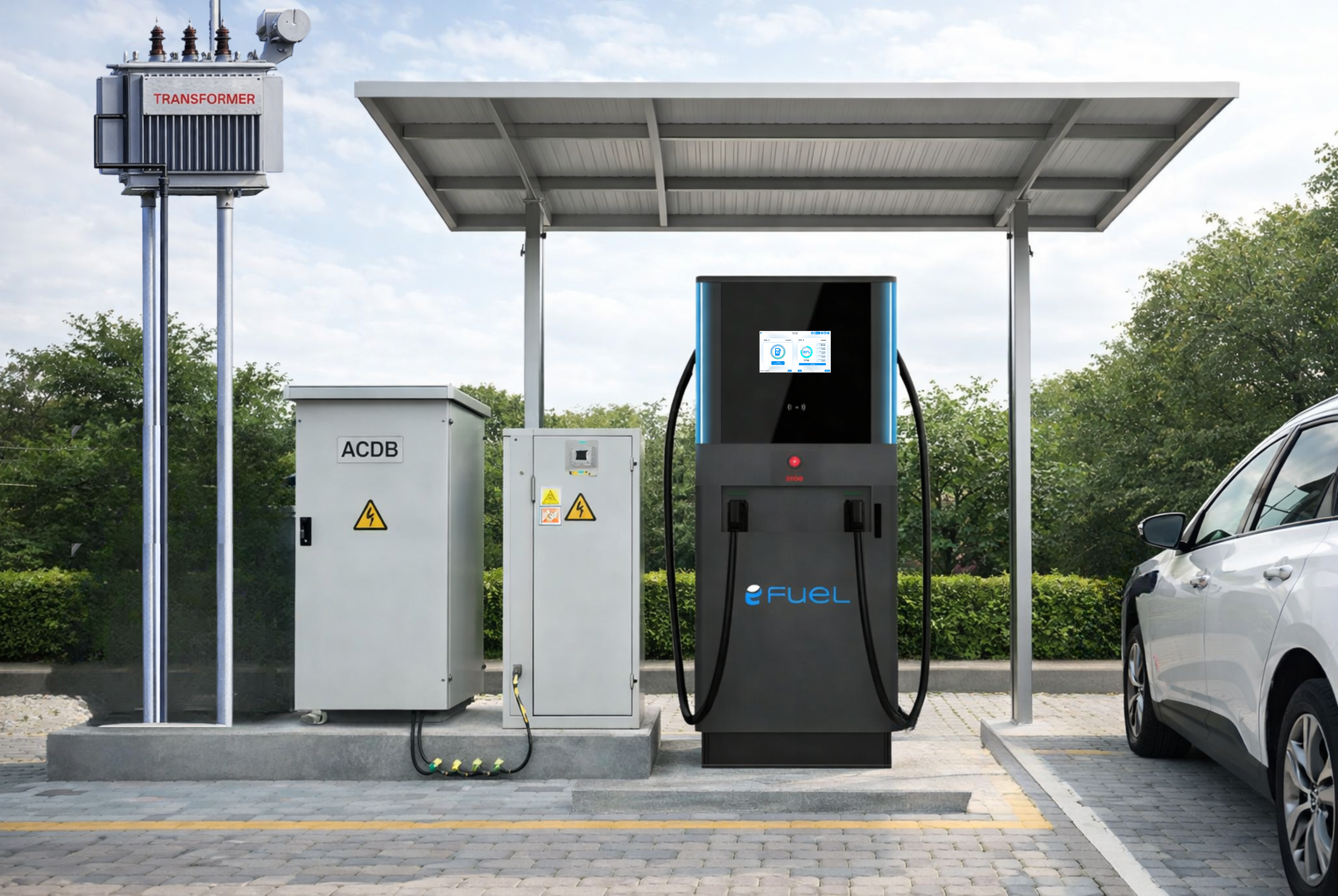
Electric vehicles are growing fast in India, and with that the need for EV charging stations is also increasing. When people see a charger, they usually think electricity goes directly to the vehicle. But in reality, there are a few important components working together to make charging safe and reliable.
Here is a simple explanation of how power reaches an EV charger and what you need to setup EV Charging station
1. Transformer – Power Source
The process starts with the transformer. Electricity from the grid comes at a high voltage, and the transformer converts it into a suitable voltage that can be used by the EV charging system.
A properly sized transformer is important because fast EV chargers need a stable and high power supply.
2. AC Distribution Box (ACDB)
After the transformer, electricity goes into the AC Distribution Box (ACDB). This box distributes power to the charger and also protects the system from electrical faults.
It helps in:
- Managing power supply
- Protecting against overload
- Ensuring safe operation of the charger
3. Safety Protection
Before electricity reaches the charger, safety devices such as MCB, MCCB, earthing, and surge protection are installed. These systems protect the equipment and vehicles from electrical issues.
4. EV Charger
Finally, electricity reaches the EV charger. When a vehicle is plugged in, the charger communicates with the vehicle and starts charging the battery safely. Efuel EV chargers include smart features like monitoring and remote control.
Transformer Requirement for EV Chargers
Choosing the right transformer capacity is important for smooth charging performance.
EV Charger vs Transformer Capacity
|
Charger Capacity |
Load for Charger |
Transformer Capacity |
Consuming Capacity |
|
30 kW |
32–35 kW |
40 kVA |
32 kVA |
|
40 kW |
43–45 kW |
63 kVA |
50.4 kVA |
|
60 kW |
65–67 kW |
100 kVA |
80 kVA |
|
120 kW |
123–128 kW |
160 kVA |
128 kVA |
|
180 kW |
195–198 kW |
250 kVA |
200 kVA |
|
240 kW |
245–250 kW |
315 kVA |
252 kVA |
5. Canopy for Protection
A canopy above the EV charger is also recommended. The canopy protects the charger and users from rain, dust, and direct sunlight. It also helps increase the life of the equipment and makes charging more comfortable for users during bad weather.
So, a basic EV charging setup usually includes:
Transformer → ACDB → Safety Protection → EV Charger → Canopy for protection → Electric Vehicle
This small addition improves safety, durability, and user experience at the charging station.
For More Information.
Website – www.efuelindia.com | Mobile - 91 83599 26941 | Mail – efuelproducts@gmail.com